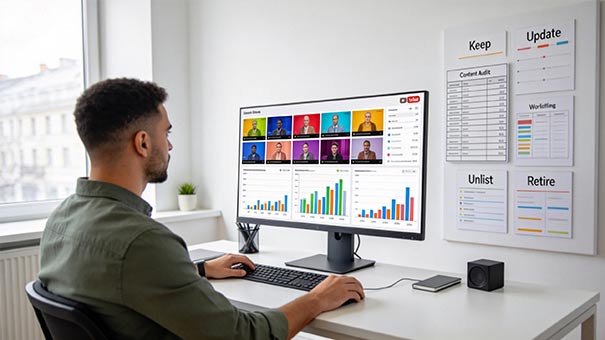
How to Plan a YouTube Channel for Long-Term Earnings


Reviewed against current official YouTube Help documentation. Last reviewed: 2026-04-17
Utility Box
Article type: Evergreen editorial guide
Primary use: Channel planning before growth gets expensive
Best for: Creators who want YouTube income that can last longer than a few upload spikes
Not a promise: This article does not promise YPP approval, income, growth, or ad performance
Core idea: Long-term earnings usually come from building a channel viewers can return to for a clear reason, then adding revenue layers that fit that relationship without distorting it
Style note: This is an editorial planning article, not legal, tax, or financial advice
Starting a YouTube channel is easy. Planning one that can support long-term earnings without becoming fragile is much harder.
That distinction matters because a channel can get views, and even get monetized, without becoming a durable business. Long-term earnings usually come later, after viewers understand what the channel is for, what kind of problem it solves, and why returning is worth it.
That is where many creators lose time. They do not usually fail because they lack ambition. They fail because they start with the wrong design question. They ask, How do I make money from this channel? before they ask, What is this channel going to be trusted for, repeatedly, by the same kind of viewer?
So channel planning is not mainly about stacking AdSense, affiliate links, sponsorships, or products. It is about building a structure that can support those layers without making the channel feel transactional. This article takes that route: it treats earnings as the result of topic fit, viewer role, publishing discipline, archive quality, and commercial restraint.
Author note
Skylar Sun is the author of this website and a creator in the YouTube Partner Program (YPP). Skylar writes editorial, experience-informed articles about YouTube channel structure, audience behavior, monetization fit, and long-term publishing strategy. Drawing from personal channel experience, ongoing observation of creator workflows, and regular review of official YouTube documentation, Skylar focuses on practical frameworks that help creators build clearer, more durable channels without relying on hype, shortcuts, or unrealistic income claims.
Who This Article Is / Is Not For
This article is for:
- creators planning a new channel and trying to avoid building around short-lived excitement
- small or mid-size channels that want a more stable revenue base over time
- creators who want to combine ads, affiliates, products, or sponsorships without letting monetization overwhelm the channel’s purpose
- people who care about long-term trust, not just rapid publishing
This article is not for:
- anyone looking for fast-income promises
- creators who want a niche list with guaranteed CPM outcomes
- channels built mainly around one-off virality with no intention of creating a useful library
- anyone looking for a substitute for official YouTube policy documents, tax advice, or legal guidance
The Better Starting Question
A lot of YouTube planning advice starts by asking which niche pays the most. That is too thin.
A more useful question is this:
What kind of viewer relationship can this channel build repeatedly, and what kinds of revenue fit that relationship without distorting it?
That changes the planning process immediately.
A finance viewer, a product-comparison viewer, a gaming strategy viewer, and a casual entertainment viewer do not arrive with the same expectations. They also do not create the same kind of next-step opportunities for the channel, even when view counts look similar on the surface.
This is why “pick a high-CPM niche” is incomplete advice. Some categories do attract stronger commercial demand than others, but a creator earns from a real channel, with a real audience, under real conditions: geography, watch behavior, topic packaging, advertiser suitability, format, viewer trust, and the channel’s overall role all matter.
YouTube’s own documentation also makes the boundary clear: YPP access, channel monetization policies, and advertiser-friendly ad eligibility are related, but they are not the same layer.
That distinction is easy to skip when a channel is small. It becomes much harder to ignore once uploads start pulling in different kinds of viewers for different reasons. A creator who builds around searchable beginner tutorials is not building the same commercial structure as a creator who builds around personality-led commentary, even if both channels reach monetization.
A Simple Way to Think About Long-Term Earnings
Here is a practical editorial framework I use when evaluating channel plans. It is not an official YouTube model. It is a planning tool.
Most long-term YouTube earnings are built from one or more of these three channel roles:
1. Archive-led channels
These earn because the library keeps answering useful questions over time.
Examples include tutorials, explainers, comparisons, beginner guides, software walkthroughs, and searchable how-to content. Evergreen value matters most here. Search and browse both help, but the archive does a large share of the long-term work.
Typical signals include older videos continuing to attract similar search queries, repeat beginner questions, and logical follow-up viewing months after publication.
2. Trust-led channels
These earn because the audience returns for the creator’s judgment, framing, personality, or perspective.
Examples include commentary, creator advice, analysis, taste-based recommendations, or strong host-led educational formats. These channels often rely less on pure search and more on recognizable voice and return behavior.
Typical signals include viewers returning less for the topic alone and more for the creator’s way of judging, framing, filtering, or explaining it.
3. Decision-led channels
These earn because the viewer is close to a meaningful decision.
Examples include product research, service comparisons, workflow tools, software picks, setup advice, and solution-oriented content where the viewer may act soon after watching. This model often has more room for affiliates, sponsors, or product layers, but it also requires higher clarity and stronger trust.
Typical signals include comments, clicks, and follow-up questions that sound close to an actual choice: what to use, what to buy, how to compare, or what to do next.
Many durable channels are hybrids.
For example, two creators can post videos around the same tool and reach similar view counts, yet still build very different businesses. One may steadily grow through searchable setup paths and comparison depth, while the other depends on commentary energy that attracts attention but does not create the same kind of return behavior or next-step fit.
The problem comes when creators design for one model and expect another one to pay them. A casual diary-style channel may not support high-value recommendations well. A decision-led channel may struggle if the creator refuses to be concrete. An archive-led channel may underperform if the creator never refreshes old winners.
That mismatch explains a lot of frustration on YouTube. A creator may feel that the niche is good, the editing is solid, and the views are respectable, yet the business still feels weak. Often the problem is not effort. It is model confusion.
Define Monetization Goals Early, but Do It Quietly
The original instinct here is right: you should think about monetization early. But the way you think about it matters.
Do not begin with a shopping list of revenue streams. Begin with a ranking.
Ask:
- Which revenue source is most natural for this channel?
- Which source might become realistic later?
- Which sources would weaken the channel if pushed too early?
A creator can technically aim for ads, affiliate links, sponsorships, memberships, digital products, services, or an email list. But not all of those belong in the same channel at the same stage. A beginner creator who forces multiple monetization paths into early uploads usually creates mixed signals: the channel looks underdeveloped editorially but overdeveloped commercially.
For most new channels, the safer planning order is:
- first, make the videos useful enough to justify return visits
- then, make the archive legible enough to support binge paths
- then, add a light next step
- then, add heavier revenue layers only after the audience’s reason for trusting you is clear
This is less exciting than “launch the channel and monetize everything,” but it usually produces clearer audience expectations, cleaner packaging choices, and fewer early signals that confuse value with selling.
Pick a Niche That Can Hold Value, Not Just Ad Rates
Niche selection still matters. The mistake is reducing that choice to advertiser demand alone.
A stronger niche decision usually has four traits:
It solves a repeat problem
The viewer does not just watch once. They can come back with a related question.
It supports both specific and broader videos
A channel needs enough depth to build a library, not just enough novelty for one month of uploads.
It can remain useful after publication
This does not mean every video must be evergreen. It means the channel should not depend entirely on content that expires on impact.
It leaves room for honest commercial relevance
Some channels can naturally support products, services, or sponsors later. Others can only do that awkwardly.
This is why some creators do better by choosing a narrower, structurally useful topic than a supposedly lucrative broad category. “Tech” is broad. “Simple home recording setups for solo educators” is much more usable. “Gaming” is broad. “Boss guides and build fixes for one live-service genre” is more durable. “Productivity” is broad. “Workflow systems for freelance editors” is more commercially legible.
A niche does not need to be glamorous. It needs to be usable repeatedly, not just attractive on paper.
Research the Competition, but Look for Missing Shape
Competitive research is useful, but not because you need to imitate the biggest channels.
You are looking for three things:
- what viewers already get
- what viewers still struggle to find
- what other channels explain badly, too vaguely, or too late
That last point is often the opportunity.
The best gaps are not always missing topics. Sometimes they are missing formats. Perhaps the niche already has advanced content, but no calm beginner entry point. Perhaps there are reviews, but no side-by-side decision guides. Perhaps creators answer the right question, but package it in a way that makes it harder for new viewers to understand quickly.
That is often where a smaller channel can compete. Not by being louder, but by being easier to understand.
Use tools only if they sharpen editorial judgment. Autosuggest, Reddit discussions, competitor comments, Google Trends, and manual review are most useful when they reveal where viewers still get stuck.
You are not looking for topics to copy. You are looking for points where better structure, earlier clarity, or stronger format logic would make the viewer’s next step easier.
Plan Around Evergreen Value, Then Add Timeliness Carefully
Evergreen content matters because it lets one upload keep working after release week.
That does not mean trend-based content is useless. It means trend-based content needs a role. For many channels, the cleanest structure is not “evergreen or timely.” It is a blend.
Think of this as a planning lens, not a preset content formula.
A practical planning split for many serious small channels is:
- 60% archive builders: tutorials, explainers, comparisons, beginner guides, and problem-solving videos
- 30% repeatable timely formats: updates, reactions with analysis, industry shifts, or seasonal decisions
- 10% experiments: new angles, format tests, packaging tests, or adjacent topics
This is not a universal formula. It is a way to stop the channel from becoming either stale or unstable. Channels with heavier news dependence, event cycles, or product-release timing may shift the ratio, but the point is balance rather than obedience to a template.
The key is that timely videos should not sit outside the channel’s logic. They should still teach the viewer what the channel is for. If a trend gives you a burst of visibility but leaves no path into the archive, it may help the analytics page more than the business.
Design a Publishing Cadence That You Can Defend
Burnout destroys more channel plans than imperfect thumbnails.
A serious upload schedule is not the most ambitious schedule. It is the one you can maintain without weakening idea quality, scripting clarity, or editorial judgment.
For many creators, one good upload a week is stronger than three rushed uploads that flatten the channel’s standards. For others, two lighter but clearly structured uploads may work better. The right cadence depends on format complexity, production load, and whether your channel relies on timeliness.
The planning rule is simple: set a pace that leaves room for thinking, not just uploading.
That means building time for:
- research
- scripting or outlining
- packaging review
- revision after analytics
- occasional refreshes of older content
Long-term earnings rarely come from pure volume. They come from a channel that gets sharper as its library grows.
Optimize for Search, but Build Paths Beyond Search
Search matters because it can introduce viewers who already know what they need. That is valuable. It is also incomplete.
A search-friendly title can bring someone in. It does not guarantee they will stay, trust you, or watch again.
So yes, plan searchable videos. Use language viewers actually type, especially where literal wording is clearer than clever wording. Make titles, descriptions, and thumbnails align with the real problem being solved. Make sure the promise of the package matches the first part of the video.
YouTube’s audience-retention guidance is useful here because it reinforces a simple point: viewers stay longer when the opening delivers on the expectation set by the title and thumbnail.
But after that, the work changes. You need the video to point somewhere:
- another related video
- a playlist
- a more advanced step
- a supporting resource
- a clearer next step within the channel’s logic
Search can introduce. Only structure can turn that introduction into return behavior.
Build Series, Libraries, and Re-entry Points
Stand-alone videos can work. Libraries work better.
If someone watches one useful video from you, what should happen next? That answer should not be accidental.
Creators often think in terms of playlists too late. A stronger approach is to think in learning paths or return paths from the start. If one video solves the beginner version of a problem, the next video should logically extend it. If one video answers a comparison question, another should answer setup, troubleshooting, or best-fit use cases. If one video gets timely attention, it should still route the viewer toward a durable part of the archive.
This is one of the quietest long-term earnings advantages on YouTube: not that a single video performs, but that a useful video helps the right viewer find the next useful thing.
Channels that feel bigger than they are often have this quality. They do not just have a good video. They have an understandable next move.
This matters even more for timely videos: if a spike has no durable re-entry path, it often leaves more dashboard motion than business value.
Refresh Old Videos Before You Chase More New Ones
Old videos are not dead inventory.
A mature channel plan includes scheduled review of older uploads:
- title clarity
- thumbnail legibility
- metadata accuracy
- pinned comments
- end screens
- description links
- whether a newer video should update or extend the older one
This matters because some channels leak value by treating every upload as finished at publication. Sometimes the highest-leverage refresh is not a full reshoot, but a clearer title, a stronger thumbnail, a better end screen, or a newer companion video that updates the older one.
In reality, some of the strongest long-term gains come from improving the way a useful back catalog is packaged and connected.
Refreshing older content also forces a useful discipline: it shows whether your channel is building durable assets or just chasing weekly motion. That is one of the clearest tests of whether the channel is becoming a library of assets or just a sequence of uploads.
Build an Off-YouTube Audience, but Earn It First
Owning more of your audience relationship is sensible. Email lists, communities, or other direct channels can reduce platform dependence over time.
But this is another place where creators often move too fast.
If the viewer has not yet received enough value from the channel, asking for an email sign-up, a Discord join, or a download can feel premature. The issue is not whether list-building is smart. It is whether the ask feels earned.
A better sequence is:
- solve the problem clearly
- create a pattern of usefulness
- offer a direct relationship that extends that usefulness
- keep the off-platform promise simple
That often works better than pushing a list-building mechanism into every early upload.
Track What Is Working, but Read the Right Signals
Analytics matter, but they need interpretation.
A creator planning for long-term earnings should watch metrics that help diagnose structure:
- click-through rate
- average view duration
- audience retention shape
- returning-viewer behavior
- traffic-source differences
- how older videos continue or fail to continue working
The most useful signals are not always the loudest ones. Views matter, but so do returning-viewer patterns, topic-to-topic consistency, watch behavior after the first click, and whether useful videos actually send the right viewer to the next useful step.
Revenue data matters too, but it is often a later diagnostic rather than the first one.
For example, weak early retention often points to one of three issues: packaging mismatch, unclear intros, or a delay before the viewer reaches the part they actually came for. In that sense, analytics are not just about judging performance. They are about locating friction in the channel’s structure.
That is a more useful way to read a dashboard: not as a scoreboard, but as a record of where the channel still confuses the viewer, attracts the wrong audience, delays value, or breaks its own promise.
Add Revenue Layers Only After the Channel’s Role Is Clear
Before adding heavier monetization, a creator should usually be able to answer three questions clearly:
- Why does this audience trust me in this specific context?
- Does this offer fit the reason they came?
- Would the channel still feel coherent if the revenue layer disappeared tomorrow?
If the answer to that third question is no, the monetization layer is probably arriving before the channel’s role is clear enough to carry it.
This is also the right place to stay conservative legally and operationally. If you use sponsorships or paid promotions, YouTube requires disclosure through its paid promotion process, and creators are also responsible for meeting local legal disclosure obligations.
A good revenue layer should make the channel easier to understand, not harder.
Collaborate to Clarify Position, Not Just Borrow Reach
Collaborations can help channels grow, but the most useful collaborations do more than expose you to another audience. They tell viewers where you belong.
That is why the best collaboration question is not, Who is bigger than me? It is, Whose audience would immediately understand why I am relevant?
When collaborations fit well, they do three things:
- make your channel easier to categorize
- reinforce trust through association
- create a second discovery route that still feels coherent
Poorly matched collaborations can do the opposite. They create temporary traffic without useful conversion into return behavior.
Protect the Channel Like a Business Asset
A channel that earns over time needs protection.
That means basic security, clean rights management, backups, and caution with assets you do not fully control. It also means treating compliance as part of the asset, not as an afterthought.
If you do not fully control or have the right to commercially use key assets in the content, growth can amplify risk rather than reduce it. That is especially true when a channel starts depending on repeatable formats, licensed material, or sponsor-linked deliverables.
A creator who ignores copyright, disclosures, reused-content risk, or advertiser-suitability boundaries is not just taking a policy risk. They are weakening the durability of the business itself. A serious channel should be designed so that growth does not constantly create compliance problems, and monetization does not constantly distort what made the channel useful in the first place.
Decision Framework by Stage
Stage 1: Before launch
- define the viewer problem you will solve repeatedly
- choose the channel role: archive-led, trust-led, decision-led, or hybrid
- decide which revenue source fits naturally later, not just which one sounds attractive now
Stage 2: First 10 to 20 uploads
- prove topic clarity
- build a small but coherent library
- test packaging without changing the channel identity every week
- avoid heavy monetization asks
Stage 3: Early traction
- identify which videos attract the right audience, not just the largest audience
- build playlists and re-entry paths
- refresh older winners
- watch retention and returning-viewer patterns carefully
Stage 4: Monetization expansion
- add the lightest next step first
- expand monetization only where fit is already visible
- keep disclosures clean and channel positioning intact
- review whether each revenue layer strengthens the channel’s role or dilutes it
Stage 5: Long-term durability
- reduce dependence on one traffic source
- strengthen off-platform audience connection
- maintain library quality
- keep updating old assets, not just producing new ones
What NOT To Do / Common Mistake
Do not plan your channel like a monetization spreadsheet with videos attached.
Common versions of this mistake include:
- choosing a niche only because someone said it pays well
- pushing affiliate links before the audience understands your judgment
- publishing too often to think clearly
- making every video feel like a pitch
- ignoring old videos that could still work with better packaging
- letting one successful spike redefine the whole channel too early
- copying large creators’ revenue models without their audience trust, catalog depth, or positioning
A Copyable Reality Check
Use this before you commit to a channel plan:
If a stranger watched three of my videos in a row, would they be able to describe:
- what this channel helps with,
- why this creator is worth listening to, and
- what should logically come next?
If the answer is unclear, the channel plan is probably still missing role clarity, archive logic, or a next step that feels natural enough for the right viewer to take.
FAQ
Do I need a high-CPM niche to build long-term earnings?
No. Higher commercial demand can help, but it does not rescue a weak channel structure. A usable topic, a coherent archive, and strong viewer fit usually matter more than niche mythology.
Is evergreen content always better than trend-based content?
No. Evergreen content is useful because it can keep working, but timely content can still matter if it strengthens the channel’s identity and routes viewers into the archive.
How often should I upload?
Often enough to improve through repetition, but not so often that quality collapses. The right answer is the cadence you can maintain while still thinking clearly.
Does every video need a monetization element?
Not in the heavy-handed sense. Every video should make the next useful step clear. That next step might be another video, a playlist, a resource, or a clearer next step within the channel’s logic.
What if I am already in YPP?
That is useful, but it is not the same thing as having a durable channel plan. YPP access and long-term channel strength are related, but they are not identical. Creators should always verify current eligibility details, feature availability, and policy requirements through official YouTube Help documentation. They should also confirm what is actually available in their own Studio account.
Next Steps
- Write a one-sentence definition of what your channel will be trusted for.
- Sort your next 20 ideas into archive builders, timely formats, and experiments.
- Build at least three clear paths from one video to the next.
- Audit your publishing cadence for thinking time, not only production time.
- Revisit one older idea, map three follow-up videos, and decide what viewer question each one should answer next.
What This Article Does Not Claim
This article does not claim that any niche guarantees strong earnings, that YPP access guarantees meaningful revenue, or that one monetization model fits every creator.
How This Article Was Reviewed
Last reviewed: 2026-04-17
This article was reviewed against current official YouTube Help documentation relevant to channel planning and monetization boundaries, including:
- the YPP overview and eligibility guidance
- YouTube channel monetization policies
- advertiser-friendly content guidelines
- audience-retention guidance in YouTube Analytics
- paid promotion disclosure rules
Reference links:
- YouTube Partner Program overview and eligibility
- YouTube channel monetization policies
- Advertiser-friendly content guidelines
- Measure key moments for audience retention
- Add paid product placements, sponsorships, and endorsements
Feature availability, monetization options, and some eligibility details can vary by region, account status, and product rollout timing.
This review process does not make the article official platform guidance. It means the article was edited to stay aligned with authoritative platform documents where policy and product boundaries matter.
Why You Can Trust This Article
This article is written as a conservative editorial guide grounded in creator-side observation and review against official YouTube Help documentation. Its goal is not to sell a formula, but to separate durable channel design from monetization myths, vague niche advice, and overconfident policy interpretations.